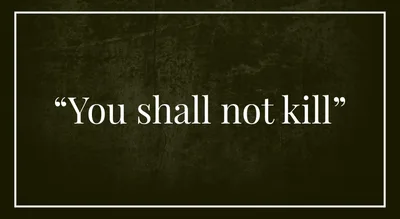
5:17) HUMAN life is sacred from its very beginning whereas from God it originally comes through His procreative gift to one’s parents and to God it eventually returns for salvation or condemnation in the realm of the eternal. So it is that as God is the Giver of life, it belongs to God to take life away for one reason or another in the realm of Divine Providence. But the said sacred rule in general accepts the particularity of defending one’s own life. So it is that the act of self-defense has a double effect, viz., the primary intention is to save one’s own life from death through the killing of the aggressor. Preserving one’s own life is the intention but taking the life of the would-be killer is but a recourse. “Preserving the common good of society requires rendering the aggressor unable to inflict harm. For his reason, the traditional teaching of the Church has acknowledged as well-founded the right and duty of legitimate public authority to punish malefactors by means of penalties commensurate with the gravity of the crime, not excluding, in cases of extreme gravity, the death penalty.” (Catechism of the Catholic Church, ECCE Pub. 2266) So it is that Death Penalty is not altogether taboo—absolutely outlawed, unconditionally anathema. But neither it is altogether affirmed—endorsed, recommended, much less promoted. The above citation proffers the key provisions for the enactment and consequent observance of the Law on the imposition of death as a penalty: it is for the preservation of the common good of the society as a whole. It is for disabling mortal aggressors to cause terminal harm to others. It is both the right and obligation of public authority to penalize perpetrators of inherently grave misdeeds premised on the inherent gravity of the crimes committed or perpetrated against individuals, groups thereof or society in general.