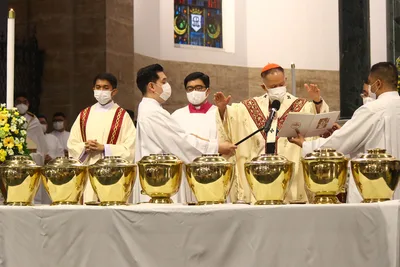
Cardinal Advincula expresses solidarity with ‘Agaton’ victims
Cardinal Jose Advincula, the archbishop of Manila, on Holy Thursday expressed solidarity with the victims of tropical depression “Agaton” in the Visayas.
 News
NewsCardinal Jose Advincula, the archbishop of Manila, on Holy Thursday expressed solidarity with the victims of tropical depression “Agaton” in the Visayas.

I have given you a model to follow, so that as I have done for you, you should also do.” (Jn 13,12-15) We have to realize then that there’s no other way to imitate Christ and to effectively achieve sanctity and actively participate in his continuing work of redemption. Paul has this relevant point to say: “Do nothing out of contentiousness or out of vainglory, but in humility let each one regard the others as his superiors, each one looking not to his own interests but to those of others.” (Phil 2,3-4) We have to learn to look at others as better than us. We have to do everything to acquire, develop and enrich this attitude of wanting to serve and not to be served, inspiring and inculcating it in others as much as we can, for it is what is truly proper of us all.
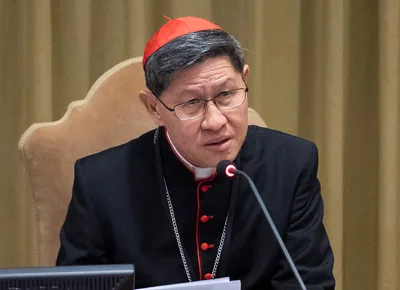
Cardinal Luis Antonio Tagle lamented on Tuesday the killing of seven people at a
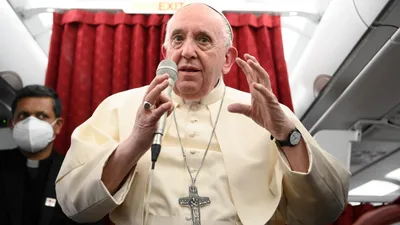
Pope Francis plans to visit Kazakhstan in September for an interreligious meeting, the Vatican has confirmed.

Roy Cimagala “AMEN, I say to you, one of you will betray me.” (Mt 26,21) With these words of Christ, let us be warned about the worst things that can come to us in life. “The Son of Man is to be handed over to men and they will kill him,” he told his disciples, “and three days after his death the Son of Man will rise.” (Mk 9,31) Preparing for the worst scenario may mean that we come out with various alternative plans so that we can move on. When Martha complained to Christ that her sister was not helping her, Christ reminded her that while what she was doing were good, there was only one thing that was necessary, and Mary, her sister, chose it, and it will not be taken away from her.
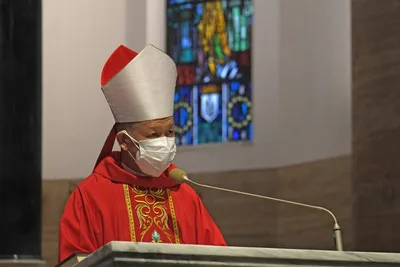
Cardinal Jose Advincula will celebrate Mass on Holy Thursday by washing the feet of 12 persons who represent the
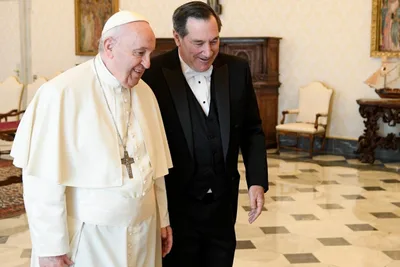
The new U.S. ambassador to the Holy See officially began his term on Monday with an audience with Pope Francis.

The Visita Iglesia Online can now be accessed through a mobile app.
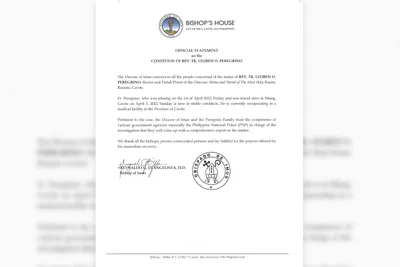
A Catholic bishop expressed hope that authorities will soon come up with a ‘comprehensive report’ on the case of a priest who was found tied and unconscious in his vehicle.

Roy Cimagala “He said this not because he cared about the poor but because he was a thief and held the money bag.” (Jn 12,6) These words were said of Judas Iscariot when he complained that the precious ointment that a woman used to anoint Christ’s feet could have been sold and the money given to the poor. One source defines virtue signaling as “the action or practice of publicly expressing opinions or sentiments intended to demonstrate one’s good character or the moral correctness of one’s position on a particular issue.” This is meant, of course, to undercut others who differ or contradict their views. Another source puts it as “a pejorative neologism for the conspicuous and disingenuous expression of moral values with the intent to enhance one’s own image.” Still another source describes it as taking “a conspicuous but essentially useless action ostensibly to support a good cause but actually to show off how much more moral one is than everybody else.” We should try our best to stay away from virtue signaling.